Sunday, 17 August 2014

Svalbard August 2014


Longyearbyen, capital of the Svalbard archipelago, is the world’s northernmost town. It has been on my mind to pay a visit ever since I saw it on a map, God knows how long ago. I think most people will somehow have heard to Spitsbergen, the largest island of the group, named by a Dutch explorer, Barents, who also gave his name to the local sea. 78 degrees north, you cannot go any further as an ordinary tourist. 
 The domain of the polar bear, the walrus and the beluga whale, I failed to see any of these animals on my short 3 night trip. To see bears and walrus I would probably have needed to go on a specialised small ship cruise to the icy eastern areas, but this would have been a very expensive prospect, and maybe one day I will undertake such an adventure. My own trip was self-organised, whereby I arranged air travel from Dublin via Oslo with Scandinavian Airways. I had a choice of spending 3 or 6 nights and for expense’ sake I decided on the former. To venture outside the 2000 person centre of Longyearbyen involves the expense of an organised trip with a guide with a gun and flares because of the ever present danger of the polar bear. Accommodation is at the higher end of Scandinavian prices, so I had determined to see Svalbard on a budget, if one could ever called it so.
A couple of interesting facts about Svalbard; In the hill above the airport is located the world’s seed vault, which is housed in a building above the airport. In the case of Armageddon, hopefully the current main crops and flowers of the world can be recreated from this repository. The infamous Spanish Influenza killed more people than the traumas of WW1. Its make-up was discovered from the bodies of coal miners who died here during the epidemic and were buried the permafrost which preserves so much after death. Svalbard used to be located in the tropical latitudes and the burial of generations of rain forests has created the organic compound known to us as coal, creating a mining community founded by the American John Munro Longyear. There is no such thing as an indigenous community, and Longyearbyen is international place where English is the lingua franca, comprised mostly by Norwegians and Swedes, with Thai people forming the third most common community.
I had a choice of accommodation. I could have stayed at the Radisson Blu, which is a very nice place, but has a reputation for “tired” rooms. I could have opted for the guest house, or camp site, or the hostel-like hotel of character “Mary Ann’s Polarigg”, but I was attracted by the web pictures to "Basecamp Trappers’ Hotel", one of a collection of small rustic hotels located in places like the African bush. The cheapest option happened, for me, to be to book through Venere.
SAS offers free coffee on its flights, and I was already well caffeinated by the time I arrived in Oslo. A 6 hour wait in that airport had to be endured, complete with fire alarm and airport evacuation. I ended up going through security twice, which in Oslo thankfully only takes a couple of minutes. With Scandinavian prices for basic food options it’s not a cheap airport to kill time and I was might relieved to get on board my onward flight to Longyearbyen, leaving behind a dull and wet Oslo.
Strategically I had chosen a window seat in front of the wing at check-in the night before. For most of the way there was complete cloud between me and the sea below. Then came a break and I peeked my first glimpse of Svalbard at the top of the descent. I was truly excited and well rewarded for my midnight check-in! This has been my best ever view from an airline window, as the pilot guided us through stark treeless valleys with borders of snow-topped mountains and here and there a glacier pouring its melt-water seawards. It was midnight and the sun was bright and rising. The 737 was guided gently as possible onto the rough permafrost runway and I stepped out in my summer tee-shirt to a quite bearable 11 degrees C. This is polar tropicality! A stuffed polar bear greeted us at the luggage belt, and soon I was onboard the Flybussen coach service to nearby Longyearbyen and my lodgings, Basecamp Trappers’ Hotel.
Outside the front door to this unique hotel was the friendly resident German Shepherd dog as he stood guard by his kennel, complete with curtained window. The cheerful receptionist handed me my room key, which was attached to a dog’s bone. I made a mental note not to flash it in front of the hotel’s or any other doggy lest I lose it. My room was as tiny as one could imagine, but just perfect in character for me as a solo traveller. The cosy bathroom sported an arctic theme, and a few old books lay on the bookshelf beside window. I could see straight up the valley, and I pulled the venetian blinds to secure a couple of hours sleep. An 8.30 appointment awaited me next morning.
Breakfast was a very nice affair, with a simple choice of good quality items, including some nice cuts of ham, smoked salmon, chunks of grainy bread, fruits, and self-made waffles which are ever-popular in Norway.
A Viking-like man stepped off the blue coach and I came forward to take my place. Beside me, a stunningly beautiful and smiling 92 year old lady introduced herself and her son and daughter to me. They were from the east coast US. She said she was an O’Shiels of Irish origin. Between them, they had been everywhere in the world, including Antarctica and there was nothing they did not know, though this had to be extracted from them by careful questioning.
Back near the airport we all boarded MS Billefjord, a fine comfortable little ship which accommodated its small crowd very well.2 zodiac life rafts were at our disposal plus what seemed like an infinite number of life-jackets. With a German Captain and Thai crew we steamed over Isfjord to the most impressive Esmark glacier. The scenery here is absolutely stunning. All the time I was on the lookout for polar bears, walrus and whales (including the arctic beluga), yet all I saw were fulmars and puffins. I was informed that I would likely have to take a long cruise towards the icy north and west coasts to glimpse the more exotic fauna, though anything could appear anywhere here at any time. Only in 2011 was English schoolboy Horatio Chapple killed by a polar bear on a camping trip in the hills beyond Longyearbyen. There is always a risk, and anyone venturing out beyond the confines of Longyearbyen must be accompanied by a licensed guide with a suitable gun and flares to distract a bear.
One of our Thai Able-Seamen took a chunk of ice from the sea and cut it up whilst the Viking poured out decent glasses of Grants whisky into which to put it. We all delighted in the wonderful whisky with genuine polar ice. The 92 year old lady was able to sprint down the incredibly steep ship’s stairs to partake of same! As we all supped our whisky the Thai seamen barbecued whale and salmon on deck and soon we were all tucking into ample helpings of delicious meat with rice and salad.
After lunch by the glacier we set sail for the Russian coal mining town of Barentsburg across the wide fjord.  Sea was calm, wind was low, and on deck it was nothing as cold as I’ve experienced elsewhere whilst nicely clothed with good waterproof coat and light woollen jumper. Svalbard has a lot of coal mines, some exhausted and some still working today. John Munro Longyear, an American coal mining magnate, gave his name to the capital, Longyearbyen. Barentsburg is the second largest settlement with just a 500 citizens of Russian and Ukrainian origin. A flight of over 200 steps leads up from the quay to the main part of town, and climbing them was good for my muscles even if I was temporarily out of breath in my state of unfitness. A young Russian guide showed us around the rather depressing but sheltered hillside settlement, and described the hotel as having 5 star comfort. I took a look inside this establishment which also housed the post office. It did sort of remind me of a poor relation to a basic Russian hotel in which I stayed in Moscow in 1979. A statue of Lenin still stands in the centre of town as a mark of Russian heritage. I’m glad they did not tear it down because it is part of history. I peeped inside the tiny Orthodox church where a lady was praying; hence I did not take any photographs of the beautiful interior. This church was built in memory of those who perished in a Russian aircraft on its approach to Longyearbyen in 1996. The coal produced here has always been of very poor quality, but the Russians maintained a strategic position here for espionage during the Cold War and they don’t feel like going home any time soon, this time I suspect for business reasons.
Having left Barentsburg our boat voyaged past the most majestic cliffs draped in rare greenery, courtesy of the nourishing droppings of the thousands of birds that nest here. Later we passed by the airport, and soon were back at Longyearbyen. That was a trip not to be forgotten.
That evening I dined at the lovely high-ceilinged panoramic dining room of the Radisson Blu Hotel. There was the offering of a limited four course menu or an all-you-can-eat buffet. Either was an expensive affair. I decided on the buffet which, appropriate to my trip, had an Arctic theme tonight. Generally I do not like strong flavours now in the way I did as a youngster. In fact I shy well away from them. This evening I decided to be brave and try tiny bits of everything on the buffet. Besides, like all dining in Scandinavia, it cost a fair buck and I was going to get my penny’s worth out of it. There were a number of reindeer salamis and smoked and dried meats; there was smoked salmon, subtle-flavoured caviar, and the strongest of all the flavours on the buffet-the prized red king crab. I found the flavour overpowering, but I do appreciate how gourmet’s might treasure the creamy flesh. The freshest and fluffiest of breads were available, including a wonderfully thin and crispy rye wafer. The hot selection featured whale, with which I am familiar and which tastes  like a slightly oily tender beef with the slightest whiff of cod-liver oil. It’s an excellent and very healthy meat. There was venison, chicken, lamb, salmon and seal, with trimmings of lemon wedges, lingonberry sauce, mustard and other condiments. I had read about seal tasting somewhat like the taste in the throat when one has a bleeding nose, and hating the taste of blood, I sure did not fancy this idea at all. I picked out the smallest piece of bearded seal I could find, and scooped plenty of delicious saffron flavoured chicken drumsticks as an antidote which worked well. Yes. The seal tasted as described, very irony, and I swallowed it whole to hastily get rid of the taste.
Next morning I had an appointment with Svalbard Husky for a Dog Wagon trip on wheels. The jeep picked me up, with a mature Dutch couple already on board. We drove inland through Adventdalen, past a compacted strip which at one time served as the airfield. When we entered their compound all 50 huskies were a-howl, with one particular girl making the most noise. We were advised that all dogs were safe to handle. They were all on long chains, each with a kennel and bowl of water. I went straight to the noisy one and was given a tremendous greeting. Likewise with all the dogs. At least I knew all had received rabies shots recently. The arctic fox is a carrier of rabies in this region and the threat has to be taken seriously. The dogs were all Alaskan Huskies, which are a mixed breed incorporating various husky breeds and all are bred for temperament and performance, and socialised with multiple humans at an early stage.
Our guide selected 12 dogs and persuaded them into the enclosed trailer with our help. The dogs didn’t mind in the least being held by the collar and persuaded to move by perfect strangers. Each and every one of them had a very tolerant nature. We drove back past Longyearbyen and upwards to a hill where a coal mining train of transport buckets begins. The jeep was parked and the 12 dogs harnessed to the wagon. We passengers were asked to help in the harnessing, and being a dog-lover I was delighted to assist.
Starting up on a height the beautiful dogs worked away enthusiastically to bring us gradually downhill towards the airport. It was wonderful sitting in a cart with 3 other people being driven by dog power, and it was at the doggies’ discretion where’re we would go. Our guide had at his disposal a brake and words of command. We came to very sharp turning point by the airport where the guide had to negotiate with the dogs for about 8 minutes as they tried several times to tow us downhill across a little ledge which would have resulted in a turnover. It was a sharp right turn and the dogs wanted to commence it a bit early. The guide shouted “left” several times, and the dogs would initially move left before moving right again. Of course he wanted them to move left AND forward a bit, but the mutts didn’t quite comprehend. 10 minutes elapsed before they “got it” and we were on our way once again. The guide made a refreshment stop for us and the dogs. We distributed one drinking bowl to each pair of huskies whilst the guide went down to a freshwater lake on a bird reserve to collect the water in a bucket. He was attacked on the head by arctic terns protecting their chicks. As the dogs took their turn to guzzle the water through mouths foaming with perspiration, we sipped coffee from a flask and enjoyed a chocolate biscuit. After a well deserved thirst quench we set off back uphill and back to the jeep where we all helped with getting the dogs back in the trailer.
In the afternoon I acquainted myself with the town, visiting the world’s northernmost shopping mall and supermarket which stocked an amazing variety of foods. Some excellent clothes shops stocked top quality arctic gear. Gun cabinets are provided for the safe keeping of weapons-a notice in one shop states that “all the polar bears in this shop are already dead”. Prices were expensive, but at least they were duty free, making them cheaper than mainland Norway. I bought myself a little silver pendant in the shape of a map of Svalbard. The only thing resembling sweets from Svalbard were boxes of Belgian chocolates in a sleeve decorated with a polar bear, which I brought back to my place of work. The local library was staff-less and featured 2 internet computers and a small shelf of books. There were coffee shops and Thai and Japanese restaurants as well as a gourmet restaurant called Huset or “The House”. A statue of a coal miner stands in the main street of the town, which is pedestrianised.
I paid a visit to the museum, which features most of the information you might want to know about Svalbard. Like most places in Longyearbyen you are asked to leave your shoes in the hall and go around in your stockinged feet.  A room is dedicated to the international aspect of the archipelago’s current population, and I learned that one Irish person is resident. Long ago there used only be a male community comprised mainly of coal miners, but now plenty of families live in Longyearbyen and a couple of schools provide education. The main floor of the museum features simulated landscapes with stuffed native animals including a polar bear specimen.
There is an Airship Museum, dedicated to the airship exploration of the North Pole, but and I was sorry not to have enough time to visit it. My flight was due to leave at 4.30am, so I had to seek an early evening repast and get sleeping in good time to wake up before 2am. I enjoyed a very tasty bar meal of fine burger and the crispiest fries I have ever tasted at the Svalbar right beside my hotel, washed down by a nice Belgian beer.
There was nobody at reception to pay my hotel bill, so I had to leave my key attached to its dog-bone on the desk. My mobile phone rang after I arrived in Oslo Airport - I didn’t have to guess they were looking for payment, but they were most pleasant about it. Had I been better organised I would have settled the bill the afternoon before. I had just settled down with a nice breakfast of bacon and eggs when the airport fire alarm sounded. I wasn’t best pleased, having paid Norwegian price for my meal, but I was asked to leave the building. Thankfully it was still in situ when the alarm was over, but it had lost its warmth.
I endured another 6 hour wait before my short connecting flight to Copenhagen. Another 2 hour wait in Copenhagen awaited me before my final flight back to Dublin. I arrived home at 7pm, full of memories.


Sunday, 6 July 2014

Newfoundland June 2014

Newfoundland was a place I had always yearned to visit. On one of those exceptionally stormy days last winter, when curiosity as to what airplanes were allowed to fly that day brought me to the Dublin Airport website, I noticed a News Announcement. It was not to do with the inclement weather and how it was affecting air traffic, but rather announcing a new direct route from Dublin to Newfoundland by the Canadian airline Westjet. This piece of exciting news brought me a sense of frustration because I was already booked on a cruise to Alaska, starting in Vancouver. I felt so tempted to book a flight to Newfoundland, but I said to myself “I can’t go to Canada twice in one year, that would be overkill.” Not long afterwards I received a phone call to tell me the Alaska cruise had been cancelled due to overbooking, and I felt slightly bereft. But then, I thought, this is my opportunity to book a self-made trip to Newfoundland!

On Monday 16th June 2014 I went to the boarding gate for the inaugural flight of Dublin to St. John’s, capital of the Canadian Province of Newfoundland & Labrador. The CEOs of Westjet and Dublin Airport each gave a speech on the launch of the new service. Westjet’s CEO said that this has been the most successful new route in Westjet’s history; it had attracted an unforeseen level of booking, and was sold out for most of the summer.

In just over four hour’s time of trans-Atlantic coffee-drinking, the aircraft touched onto a very wet runway at St. John’s. A welcome party of traditional Irish music awaited us in arrivals, with servings of more coffee, savouries and cakes. After partaking in these I got a taxi to my accommodation for five nights, the Quality Hotel Harbourview. Although it was only 11am, my room was ready, and I indulged in yet another dose of caffeine from the coffee-maker. The continuous rain dulled a promising view from my window straight down the city streets lined with the so-called “Jelly Bean” terraces of different-coloured wooden houses, leading Downtown and up the hill to the Basilica and the Rooms Museum & Gallery.

Despite the cosiness of my room I tempted myself to explore the locale, and sporting a raincoat with hood I made my way uphill to the nearby historic building of the Commissariat House. It quickly became apparent that cars stop when one even looks as if one is about to cross the street here. The only other place I have observed this nicety is in the thick winter snow of Tromso in Norway. Indeed it was only back in May when Newfoundland had its last snow. Today it was just non-stop rain. Inside the historic wooden building I had my first encounter with the very peculiar local accent which was mostly “stage Irish” with some West Country English, and the odd touch of North American for good measure. “Are you really from hereabouts?” I asked the lady on duty, and she replied “Oi be from here alroigh-sh, and you be from...Oirland...I guess.” I assured her I was indeed, just off the first direct flight. She had heard about the new service and reckoned every second Newfoundlander would use it. A friend of hers has a daughter that spent two years in Ireland doing voluntary work for Simon, and followed that up by completing a degree in Sociology at St. John’s University.

Having completed the tour of the building I wandered through the leafy surrounds towards a gate which indicated public access. “Government House”, which is Newfoundland’s answer to Ireland’s “Farmleigh”, was closed until July according to my literature. The security man called me over, and I thought I might be in trouble for trespassing. “Come look in the hall, and get a taste for what its loike”, he beckoned. A magnificent spectacle it is. “Now come see some nice horses, this way”. At the stables I was introduced to four enormous animals, including Vince, who had stomach problems that was causing some concern. “Them horses be with the Mounted Police, for ceremonies loike.” I got a complete tour of the grounds, by which time I was thoroughly saturated, the rain having penetrated right through my raincoat, my feet and shoes sodden like sponges in the puddles. Back at the hotel I removed all my sodden garments and laid them out to dry over the next two days in my heated room.

It was way too wet to get my second raincoat saturated, so I dined in my hotel, which was rated as mediocre as far as food goes. I ordered the traditional Newfoundland Cod’s Tongues, which were served with fries and a wedge of lemon. Cod tongues are not actually the tongues of the fish, but a delicious piece of flesh in the area of the throat. They were absolutely scrumptious, and served with “scrunchions” or diced pork scratchings, which are a traditional accompaniment.


Thankfully, the morning brought sunshine. Loyola O’Brien picked me up in his minibus to bring me to my booked boat trip with O’Briens’ Boat Tours at the wee village of Bay Bulls, some 25km down the road on the Irish Loop. It was lovely to see some pristine countryside with forests and lakes. Loyola chatted away to me about the Irish connections and told me his brother Michael would be commanding the boat on this occasion. On board, Loyola took the mic and gave us a guided commentary. He began with the safety briefing, advising us that we wouldn’t last a minute in the freezing water, but that we should aim to keep dry and get straight into the life raft which was available to deploy at the back. He cautioned that once a boat of this size would get into trouble it would go down with determination and that we’d have to be quick about getting saved! Loyola followed this up with a rendition of Fiddler’s Green, a song about the afterlife of fishermen.

A humpback whale was spotted. Our skipper, Michael, followed the whale at a distance, as he surfaced now and again. A Minke whale also appeared. It took quite a lot of our time tracking the whale, so that when we came to the famous bird cliffs of Witless Bay, our bird-spotting was brief enough. Still, it was very exciting to see so many puffins in one place at one time, and the seas were a fantastic emerald green close to the rocks.

Before returning to base, Loyola “Screeched-in” a couple from another part of Canada to become honorary Newfoundlanders. The pair had don sou’wester hats in order to take on the supposed appearance of a “Newfie” (sometimes regarded as derogatory), then Loyola asked as per tradition “Is you a Screecher?”, whilst holding up the wet fish to be kissed. Following embrace of fish, the couple declared “We is”, followed by a shot of Screech, the Jamaican rum which used to be traded for cod. Loyola then declared “Long may your big jib draw, and may the road rise up to meet you”, the latter part of sentence derived from a famous old Irish saying. In the evening I dined out at a nearby Tripadvisor recommended Korean restaurant, where I enjoyed a most delicious meal.

A second bright sunny day encouraged me to my goal of Signal Hill, a mere two kilometres walk away, but it is 143 metres high. Half way up I stopped off by Deadman’s Pond, which is overlooked by Gibbet Hill, where executed criminals were elevated within view of the denizens of St. John’s to discourage them to follow suit. Today some happy local black ducks bobbed about in the water which was fringed by fluffy white bog cotton.

Across the road I made a detour into the Geo Centre, a vast and spectacular underground museum dedicated to local and world geology, exploration and mining, oil and gas harvesting, and even a room dedicated to the causes of the Titanic disaster which took place a few hundred miles offshore in “iceberg alley”.

A little further up the hill I called into the Signal Hill Interpretation Centre, which described the first Marconi signal from Cornwall to North America at this point, as well as the voyage of John Cabot, and Italian explorer who ventured here from Bristol. I recall, during a visit to that English city, learning about the voyage. There is a tower in Bristol named after him, just as there is Cabot’s Tower on the peak of Signal Hill.
Not being fit, I struggled up the hill, as people sauntered past me. Once up there, the reward was great. I had a terrific view over two icebergs, and south down to Spear Head, where the sun rises first in North America. Many trails lead from Cabot’s Tower around the cliffs. I came upon a beautiful black Newfoundland dog with his owner. Another tourist asked to hold his lead as she was photographed with him, and this is the picture I got taking of the dog. He was a real sweetheart.

Going downhill I detoured through a wonderful nature park by the Geo Centre. Dozens of native wild plants were in blossom, all labelled. Here in St. John’s everything of interest to tourists and locals alike has an information notice. From the park I walked a trail into an upmarket new housing estate, and from her I walked half a kilometre to the most photographed of all Newfoundland fishing villages, Quidi Vidi, still within the environs of St. John’s city. Some beautiful wooden buildings and fisherman’s “rooms” surrounded the narrow hill-clad environs of the village. I went into the Quidi Vidi (pronounced Kiddy Viddy) brewery and purchased some beer, followed up by a visit to the Quidi Vidi Plantation which is an incubation centre for people starting a business in craft production.

On the way back to the hotel I stopped by the Inn of Olde, a very individual pub with an eclectic gathering of items on display. The lady behind the bar had the strongest local accent of any individual I had met. She was looking after the place for the owner, Linda, who was next door in her home doing stuff. She asked me if I was a personal friend of Daniel O’Donnell, who is a regular visitor to Newfoundland, and to this pub. She discussed his wife, Majella’s illness, and his mother’s recent death. She was also familiar with some of the cast of Coronation Street, which is followed by lots of Newfoundlanders. “Oi have to go to Gander next month, which is 4 hours droive, but Oi hate drivin’, what with the mousse on the highway. It’s as cheap to floi to Oirland, that’s whoi de Oirish route will do so well, as well as that, everyone here wants to go to Oireland.

A thoroughly wet day followed, same as the day I arrived. The weather does nothing by halves here. This was a day for the museums. I walked uphill and south to the Basilica Cathedral of St. John the Baptist, which was consecrated in 1855. Construction was supervised by Irish Contractors, under the eye of Irish Archbishop Michael Fleming. Stone from Clonmel was used. A funeral was taking place when I entered through its doors, so it was not appropriate to take a photograph of the interior. It is a fine grey stone building with two towers and a plethora of associated buildings extending from it.
Just across the road loomed the great modern building of The Rooms, a museum, gallery and archive centre whose design is based on the large huts used by Newfoundland fishermen for storing their equipment. It is a wonderful piece of architecture which, along with the basilica, dominates the skyline of St. John’s. Within, I viewed many exhibitions, including artist Pam Hall’s collection of paper houses, collected from many friends throughout the world and displayed in most interesting ways. I learned a great deal about the culture of the various peoples who make up the population of Newfoundland and Labrador, including a large section on the Irish!

I made my way downhill via the fine Anglican Cathedral to Downtown, or as we tend to call it the City Centre. On little George Street, the hub of some infamous wild carry-on at night, I made my way into one of the city’s Irish pubs, Bridie Molloys. This was no shamrock-kitsch version of an Irish pub, but one which you would find at home, without the leprechauns. Irish Stew and Guinness featured on the menu, but I opted for one of the traditional Newfoundland dishes, a Jigg’s Dinner. Not a pretty sight, but very tasty, it consisted of a mash-up of corned beef, turnip, carrot, cabbage, pease pudding, stuffing, and gravy. Washed down with Quidi Vidi beer.

My final call of the day was the Railway Coastal Museum which is at the southern end of the city. My walk took me past the Newman Wine Vaults and O’Mara’s Pharmacy Museum, both of which would not be open until July. The rain, by now, was worse than ever, and I was barely able to take a look at the beautiful historic engine and carriages parked outside the museum. Inside was a lovely model railway, featuring elements of the now defunct railway between St. John’s and Port Aux Basques on the south-west coast of the island of Newfoundland. The museum featured very interesting information about the now defunct railway service and the shipping lines to Nova Scotia on the Canadian mainland.


A long walk through the city brought me back to the hotel. I was far too wet and miserable to launch out for an evening meal, so I settled for a nice bit of Newfoundland cod in the restaurant.

This city is so full of hills, my legs were giving out. I decided to get a taxi to my final specific point of interest, the Fluvarium, and then walk the 3 kilometres downhill back to the hotel. It was a sunny day, ideal for my pursuit. To explain a bit about the Fluvarium; it rhymes with aquarium, one looks through glass at fish, but the glass has a direct view of brown trout and even salmon as they swim through the local river. It is an octagonal building located in Pippy Park, which is St. John’s equivalent of the Phoenix Park in Dublin. The visitor descends a staircase to the area underground where one can inspect all elements of the riverbed as well as the fish. There are plenty of displays on the rivers of St. John’s, particular Rennie’s River which was named after a Scottish Miller who operated a baking mill on it.

Following my visit I began my walk back, starting at the Long Pond where a few people were practising Canadian canoeing. I continued along the Rennie’s River Trail, which a walk akin to the ones alongside the Dodder and Tolka Rivers in Dublin. The Rennie’s River is very rocky in places, and makes for a picturesque river valley through the most upmarket suburbs of St. John’s. Beautiful boardwalks are provided with lovely foot bridges, a gazebo, and picnic tables. Many beautiful houses with verandas peep up beyond the banks, and some have terraces, gardens and steps descending right down to the river itself. I continued my walk through Bannerman Park, where a tiny Miniature Pinscher was frolicking about in the safe enclosure for off-lead dogs.

For evening dinner I came by a plain but good Chinese restaurant, frequented by Chinese people, always a good sign. I chose an absolutely delicious dish of beef sizzled with fresh orange zest, unforgettable. A few men at two tables men were speaking across to one another in Cantonese, and one of turned around and apologised to me, and introduced himself as hailing from Hong Kong, I told him it is very much on my bucket list!


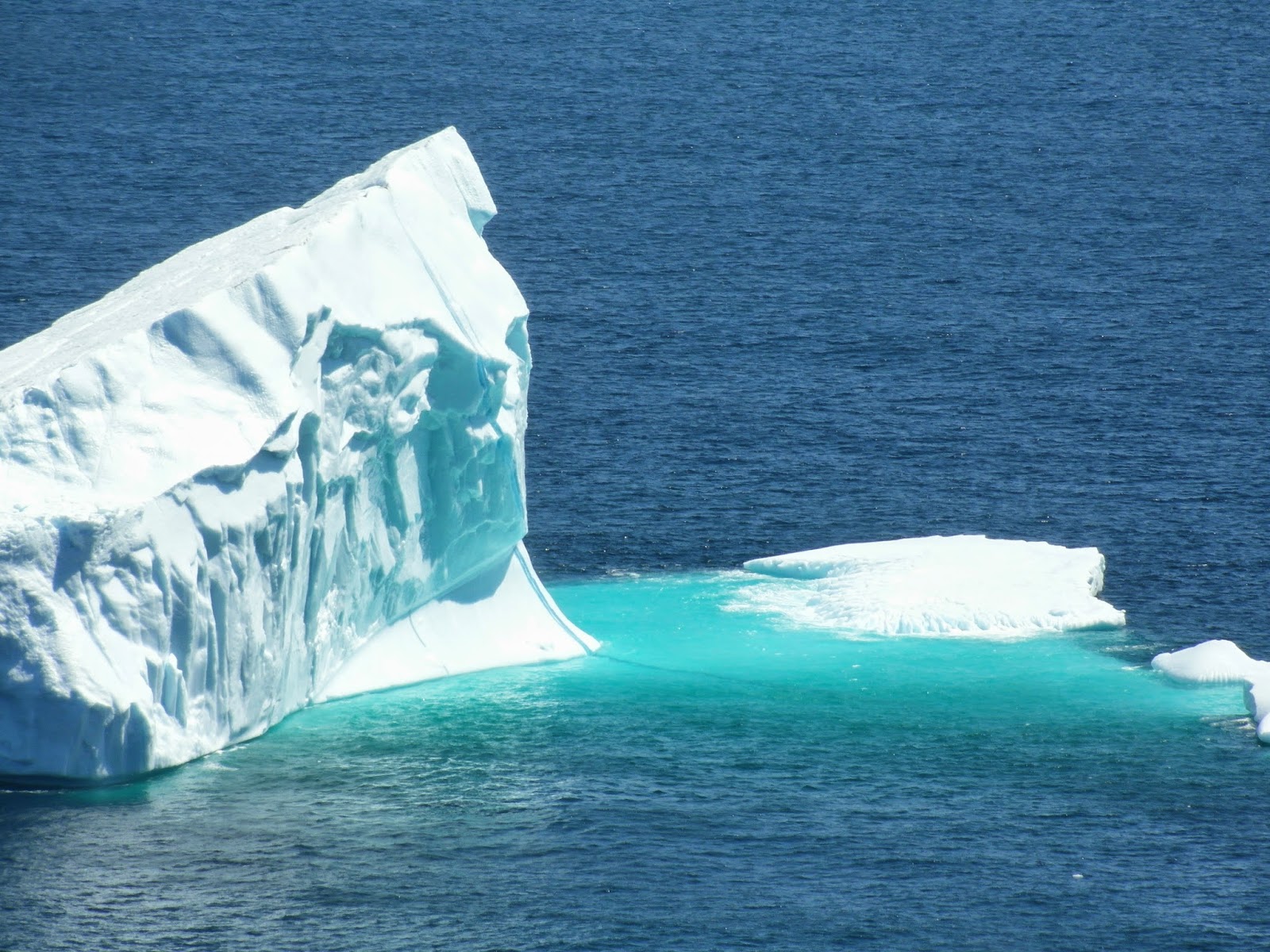
On the day of my departure my flight was leaving at around 11pm, so I had the best part of a day to fit in something. I considered going to the Botanic Gardens, but they are at the southerly end of Pippy Park, and difficult to get back from. Besides, it was a day of mixed weather, with some nasty rain showers on the horizon. I decided to take another boat trip, this time with Dee Jay Charters. The boat was small enough to enter the narrows of Quidi Vidi harbour, so I was able to see this beautiful village from a different perspective which was very worthwhile. The boat passed very close to the two glaciers outside of St. John’s Harbour, and they looked enormous by comparison to what they appeared from shore. The voyage continued to Cape Spear, the easternmost point in the whole of the Americas. It was fun waving up to the folks wandering about the elevated shore and lighthouse. The boat returned to St. John’s close to some picturesque bays with interesting rock formations, and one with a waterfall splashing from cliffs down to a pebble beach. Voyaging through the narrows of St. John’s Harbour was fascinating with views to Signal Hill.

Before departure I had a lovely meal in the Sheraton Hotel -3 minutes up the hill- of salmon with Screech sauce and ice-cream, again with Screech sauce. The flight home took less than four hours, and I was just delighted to arrive in Dublin at the dawn of a new day.

Tuesday, 29 April 2014

Easter trip to Baltimore, Cape Clear & Sherkin islands

As part of my quest to conquer all of Ireland’s inhabited offshore islands, I made plans to stay in Baltimore, West Cork, during Easter 2014. From there I could visit both Sherkin & Cape Clear Islands during a 3 night stay at the Channel View Bed & Breakfast, just outside of the lovely Baltimore village which is famed for its excellent sailing waters.
I chose to get there and back by public transport, which involved a journey from Dublin to Cork city by rail, an onward bus connection to Skibbereen, and finally a short bus ride to Baltimore. Bus Eireann (Ireland’s public bus company) provides an online Journey Planner, so that I could confirm what times suitable buses would run.
As is my typical experience, rail travel to Cork was very pleasant and relaxing, and it was a short walk across the city to the bus station. The buses to Baltimore were very comfortable and smooth, and I was able to enjoy seeing the beautiful towns and villages through which we passed, especially Clonakilty and Rosscarbery. This would have been denied me had I been driving. The only negative is the price of the bus travel between Cork and Baltimore, which is more expensive than the longer rail journey from Dublin to Cork.
Channel View Bed & Breakfast was merely €40 per night single, which was very reasonable. The view from my room was very beautiful; as the name suggests a view of a channel of the blue estuarine channel of the River Ilen as its sweeps around Ringarogy Island. Host Margaret provided all day tea and coffee in the front room with an everlasting supply of biscuits. It was only a 6 minute walk to Casey’s Hotel, which is famous for its delicious food.
Having journeyed down on a bright and pleasant Good Friday, I awoke on Easter Saturday to sunshine and a full Irish breakfast, after which I walked the 20 minutes down to the ferry for Sherkin Island. A quick 10 minute crossing brought me to the pier on Sherkin Island, where a local lady was bravely swimming in the chilly waters. Just a minute uphill brought me to the almost complete ruins of the Friary. Many years ago I remember landing here in a small yacht whilst on a sailing course with the Glenans sailing school which used to be based in Baltimore. Over 20 years ago I saw Sherkin in the sun, and again today here was the most beautiful bright sunny day. I walked past the community centre and its adjacent portacabin library, the national school and waste recycling centre en route to the delightful beaches of Cow Strand and Silver Strand. Sherkin is a gently hilly island with some excellent grazing land for cattle, together with shady lanes, copses, rocky headlands, sandy coves and land-locked stilly bay, a little bit of everything that are the classic features of south West Cork. I visited the island church, and came across a third sandy cove. Ancient run-down, un-taxed and probably un-insured wrecks of cars passed me occasionally, belching black smoke and making raucous noises from broken exhaust pipes. No police to supervise the motoring activities of the islands!
The previous time I visited Sherkin Island I had lunch in the piratically themed Jolly Roger pub, but this time it was closed, in the process of changing ownership. Instead I enjoyed lunch in the Islanders’ Rest, a hotel with a terrace overlooking Baltimore Harbour which today was the scene of myriad white-sailed laser dinghies. Just below the hotel lies a yacht marina, and nearby is beautiful Horseshoe Bay which is shaped exactly as its name suggests.
Easter Sunday proved even sunnier than Saturday, a lovely day for the 45 minute ferry ride to Cape Clear Island, Ireland’s most southerly piece of land. Passing the Baltimore Beacon, a navigational monument set on top of the headland at the entrance to the harbour, the boat battled more open waters as it sailed by the south coast of Sherkin. I sat out on deck with my face to the sun, surprised to be feeling this warm on the open seas. Just ahead lay the hilly profile of Cape Clear Island, its south shore plunging almost sheer to the sea. The ferry swung around to hug its more gently sloping north shore, with signs of habitation here and there. Some impressive rock formations appeared just before the narrow entrance to the island’s natural harbour, and shortly I was on terra firma. A sign indicated “Gaeltacht” to signify that this is an Irish Gaelic speaking area, though I was to hear not a word of the language spoken during my 3 hours on shore. Children were wading waist deep in the waters by the harbour beach, and I can testify that the cold hurt my bones as I paddled merely ankle deep. The Bird Observatory seemed to be deserted, but the shop-come-pub-come-bistro by the beach was doing a roaring trade with folks enjoying beers and ice-cream at the outdoor tables.
An impossibly steep road climbed the vertical hill to the east, and I had no intention of expending my energies legging up that in spite of the possibilities of getting a good shot. Moreover I was worried about meeting one of the island car wrecks making its way downward with nowhere to step out of the way. Instead I followed the crowd up the more moderate slope to gain views of the South Harbour, an attractive bay which is overlooked by the campsite where Mongolian yurts provide overnight accommodation for some very happy campers. I met these folk in friendly Cotter’s Bar, and they spoke of the heated comfort of their luxurious tents. Cotters was supplying dinner for the island’s tourists that evening and the choice was between 3 types of Thai curry. To quote Basil Fawlty “duck done in 3 completely different ways” and “if you don’t like duck you’re rather stuck”.
Cape Clear had suffered greatly during the immense winter storms, and work was in progress to repair the harbour. The weather was so blissful this day I could not imagine such a thing as a tempest. Returning to Baltimore, the ferry took the route to the north of Sherkin, which made for a very smooth passage and provided further interesting views.

Monday morning was chilly and wet, my day to return home. The Bed & Breakfast owner kindly gave me a lift to the deserted bus stop at Baltimore. I wondered why I was the only one waiting, only to be told by someone “sure no bus comes here on a Sunday or bank Holiday Monday”. I chirped “Bus Eireann’s Journey Planner assured me there was a bus” and the guy just answered in a strong West Cork accent “you poor stupid thing...imagine you believed that” With this horrible new knowledge I hopped up to Bushe’s pub and asked them could they phone a taxi expeditiously as I had a bus to catch in Skibbereen. It took 3 phone calls before they could get me one, and I waited nervously fidgeting with a beer mat. I made it to my Skibbereen connection with minutes to spare and hence reached the homeward bound train on which I was booked.

Wednesday, 19 March 2014

Kaunas, Lithuania March 2014


I had no intention of adding annual leave onto the St. Patrick’s public holiday weekend, so I wanted somewhere to pop to for two nights. With this in mind, I played around the websites of Aer Lingus and Ryanair to see where I could fly over to on the Saturday and return from on the Monday. My intention was to see somewhere new to me, and Kaunas emerged as the only candidate and the air fare was within reason. I must confess I didn’t know too much about Lithuanias’s second city except that I remember having picked up some brochures at the Holiday World exhibition as well as from a lonely Lithuanian tourist board stand at Farmleigh courtyard. I remember saying to the girl who manned it that I would definitely go there one day, but just as I walked away I confided to the person in my company that Lithuania has the highest murder rate in Europe and I was a tad nervous about the idea of a solo trip there.
Still, without thinking too much, I booked my flight and followed up by checking out Tripadvisor for a suitable hotel. There was a selection to choose from, but the one that stood out for me was the 4 star 48 roomed Daugirdas Hotel, pretty much the only option located in the Old Town. It offered single rooms with breakfast for €50 per night, using the Trivago website. I could have chosen cheaper and equally recommended options in the new town but my heart set on this conversion of an old town house with modern comforts.
Boarding at Dublin Airport, it seemed that I was the only Irish person on the flight, the remaining were part of the huge Lithuanian diaspora who live in Ireland. It happened that the taxi driver bringing me to the airport was Lithuanian, and he told me how much he hates the climate of his home country and that he would never settle back because of the cold. He loves the relative mildness of Ireland and spends his summer holidays back home where his Irish earned money goes a very long way. The flight took exactly 3 hours. All the sleeping babies on board woke up during the turbulent approach to Kaunas in gale force winds, with the mother beside me trying to make a fun game out of the lurches as if it were a fairground ride. All clapped at the perfect touchdown, which was quickly drowned out by Michael O’Leary’s traditional “on-time” bugle.
One of the first things I observed travelling into the city by taxi was the unique sequence of the traffic lights. Red – orange – flashing green – green. The taxi came to a stop on the orange. The countries of old “Eastern Europe” (bear in mind Lithuania is really a central European country) have had a bad traffic accident rate, and I have been terrified travelling by car in Poland, but I felt perfectly at ease in Lithuania. Maybe it’s because I’ve been in the likes of India in the meantime!
The hotel website had advertised the single rooms as being small, so I was pleasantly surprised at how spacious my room was. My high ceilinged first floor room (201) had two side windows overlooking the atrium where the reception is located and a window at the end looking out onto a lane. The bathroom had a heated floor with non-slip tiles that dried out minutes after getting wet. The bed was very comfortable indeed and the very quiet location made for a great night’s sleep. One can drink the tap water without any problem and it is quite palatable, and a separate waste water system is used in this hotel to fill the toilet cisterns, hence the yellow water as if one had failed to flush. Breakfast had the usual cereals, pastries, fruit etc. as well as bacon, eggs, sausage and tomato.
Essentially, I had Sunday to explore Kaunas (pronounced like ice-cream “cone” with “ass” as in donkey tagged on), so I had researched my walking route with reference to places of interest open on Sunday. Naturally I had to exclude quite a number of places located outside the city centre, such as the notable Pazaislis Monastery. I was greeted by snow, and indeed this was followed by hail, strong winds, sunshine, mist, rain, cold and relative warmth, all seasons in a day. First, I strolled through the Old Town, and my route brought me through the old town square where the Old Town Hall is the centrepiece, known locally as the “white swan”. It serves as the marriage registry office. Lithuania is a predominantly Roman Catholic country as people were busy heading to the local church services. As I strolled past the red round turret of Kaunas Castle a local girl walked her Irish Setter on a long lead in the grassy moat. I headed down Vilniaus Street, the main pedestrianised avenue of the old town, and took a look inside the Cathedral with its magnificent statuary and relief work around the altar area. Lots of individualistic buildings in the area commanded attention, including the medieval House of Thunder, named after the pagan god Perkunas. Lithuania was the last country in Europe to have a non-pagan religion. The Old Town has a distinctly village feel with nearly all buildings elevated no more than two stories. Some lovely pubs, cafe-bars and restaurants line the streets, and two historic telephone kiosks stand near the cathedral.
The far end of Vilniaus Street meets the main thoroughfare of the modern city, Laisves Boulevard, which is also a pedestrian only area. Now I could describe Kaunas as a walkers paradise, and indeed it would be except for the fact that a large number of paving slabs are half uprooted by the vicious icy winters, and there are all sorts of holes and pitfalls for the pedestrian to all into or trip over. I had to keep my eyes glued on the pavement, which to some extent spoilt my enjoyment of the beautiful street scenes. There is a fair bit of graffiti, yet the streets are immaculately litter-free thanks to both the inclination of locals to use litter and recycling bins, and street cleaners vigorously in pursuit of the slightest slip of paper being blown about in the high winds.
Being Sunday, this meant that a lot of places of interest would be closed, yet I was surprised and delighted to find a lively Sunday market adorning the long length of Laisves Boulevard. Splendid wicker furniture was the product of a few stands, some of it adult sized, some fashioned especially for children. Woodwork featured at many stalls, with bird houses appearing to be a national obsession with miniature ones for dolls’ houses, as well as cheese boards, spoons, and even elaborate children’s swings which were there for the testing. Many other crafts were represented, including elaborations on the dried flowers theme, pottery, national motifs, and a host of products produced with the aid of bees. Bee-keeping is a venerable ancient tradition of Lithuania, and of course honey, cosmetics, mead and beeswax candles featured large in the market. Food products were omnipresent, with an abundance of charcuterie, cuts of dark rye bread, smoked fish from Palanga, sausages, stews, Cornish-pasty like pies, stuffed cabbage leaves and all sorts of heavenly aromatic savoury delights cooking over charcoals. Stall-holders did all they could to stop the high winds from blowing over their canopies, but everyone, including passers-by stepped in to help. Many stands served delightful beer, including hot heated brews to warm the cockles. It reminded me of a German Christmas market, with benches and tables to sit at whilst consuming the consumables. I enjoyed a lovely simple potato delight, a potato cut into a thin spiral and deep fried as one potato crisp.
Children delighted at the candy-floss stands, and enjoyed petting the impeccably behaved and manicured Shetland pony which was available for rides. I passed a fashion shop with had in its window display a toy “stuffed” Lithuanian Hound which resembles a hound crossed with a Doberman Pinscher. I didn’t see a real life native breed, but there were pugs, poodles, Siberian Huskies, Yorkshire Terriers and a West Highland terrier in show trim, which rendered him rather vulnerable to the cold. I saw an enormous advert for cat food, but I reckon all the cats must have been warming themselves indoors.
Diverting off the principal streets I took one of the city’s two short funicular railways up to the Christ’s Resurrection Church which was founded in 1918 as a thanks to God for the independence of Lithuania in the city which was the then capital. A stark white building, not quite my cup of tea, yet it is beloved of the citizens.
From the sacred to the demonic, I paid a visit to the Devils Museum, the only such one in the world. A large collection of devil figurines and masks from Lithuania and much further afield, it was initiated by the landscape artist Žmuidzinavičius. Part of the museum is the house where he lived and on display are his pastoral scenes and his studio. I love his impressionistic style and I found it interesting that he depicted scenes of women with enormous hands working on the land with men portrayed in a rather servile role.
Returning to the Old Town I called into the modestly sized Presidential Palace which houses part of the city’s Curlionis Art Collection, and is also a museum of how a well-to-do family typically lived in pre Soviet Lithuania. The building is still used for civic receptions.
At dinner time I tried out my hotel’s cellar restaurant. I chose the salmon poached in veal stock, served with a caramel and orange reduction, accompanied by boiled potato rectangles and courgette spaghetti. It came presented as a work of art on a rectangular plate. Wine was out of range of my pocket, and without the option of a single glass or half bottle, so I chose to have a sensibly priced glass of Martini. My desert was delightful and quite unique; a chocolate fondant deep fried in a chocolate drop scone mixture and served with drops of raspberry coulis and a sprig of mint. It came in three teardrop shaped pieces with long crispy tails, the most mouth watering sweet I have ever had the pleasure to consume.
My flight home from Kaunas arrived in Dublin fifteen minutes early, and I was gobsmacked at the flight crew’s failure to blow the “on time” Ryanair bugle, having braced my ears for its reverberation. A sacking offence, I guess, in Michael O’Leary’s books.


Saturday, 6 July 2013

Herm & Sark

Herm & Sark
I had already been to three of the five main Chanel Islands – Jersey, Guernsey and Alderney. Two remained to be visited, the traffic-free islands of Sark and Herm. I chose June for my holiday, just warm enough to enjoy a sea swim. I was thinking about that famous white sand beach on little Herm for my sea swim as Sark’s bays are less suited to taking a dip in the same way as are the coves beneath the cliff walk in Howth. In fact you could imagine Sark as if Howth were an island with the hilltop cut off and without the flat sandy bits.
The trip took quite a lot of planning as it involved getting to Guernsey first and spending a night there. I flew to Southampton with Flybe, and eight hours later onwards to Guernsey. At my time of booking Flybe would not allow me to book the complete trip on their website, so I fell back on Gohop.ie which did allow me to make the booking on one ticket so that I didn’t have to take responsibility for a suitcase in Southampton Airport for eight tedious hours. When I checked-in at Dublin Airport I had a land, being charged €100 for 14kg baggage. They said I had not booked it online. Gohop.ie didn’t bring up a baggage option, so I didn’t know there was an extra charge. I just had to pay up without fuss, and was advised to book my return baggage online, which would cost another €40. I have since sent a letter with payment proof to Gohop and await their response.
My time in Southampton Airport flew by. Booking my return baggage ate some time, as did having a meal, read magazines, and then after the early start I nodded off on the well-padded airport seats. It’s a well-run, customer friendly airport with a favourable staff to passenger ratio and much of their business comes from cruise connections. Best of all, today was the start of a period of beautiful sunny weather which lasted the whole of my eight day trip. The minute I boarded the 30 minute flight to Guernsey I found myself in conversation with one of its very sociable residents. I recalled from previous visits that the islanders are more talkative than the Irish, and indeed a lady who is a customer of my library has a Guernsey father, and she is noted to be among the most verbally active visitor of our clients.
The taxi driver who brought me to my hotel for the night had an Irish father, and he regaled me in stories of the annual family reunion in Galway for his father’s anniversary Mass. A born Guernseyman and true in laid-back chatty manner, he regularly visits the Aran Islands. As we turned into my hotel, La Colinette in St. Peter Port., he pointed my way to the harbour for next morning. I was delighted with my bedroom in this very lovely three star hotel. The tea & coffee facilities contained lots of sweetie goodies, and there was mineral water. My window overlooked a garden and swimming pool and I was sorry I had not longer to utilise this.
Nest morning I walked a very pleasant half a mile downhill to the harbour where I bought a return ticket to the Isle of Herm. Tidal variations are the second highest in this part of the world, and as it was low tide I had to make my way down loads of steps to the boat. I had left my luggage on the pier and was reassured this would appear in my hotel room. There is only one hotel in Herm and here they distribute all luggage to various rooms and self catering cottages as long as there is a label. The catamaran boat was spacious and the journey lasted a mere 25 minutes in calm seas. The Chanel Islands coats are extremely rocky and tidal-prone so we had to land at the Rosaire Steps, a landing-point away from the main harbour. At least I didn’t have to haul my baggage up those many steps, and as I walked through The Arch I was immediately introduced with the luxuriant plantations on the island.  
Shortly I found myself in the delightful leafy White House Hotel garden, bordered by a hilly plantation of majestic architectural plants such as bee-live echiums. Palm trees form a backdrop to the swimming pool and the white hotel building. A pair of pheasants strutted the lawns between sun beds, benches and a swinging chair. Enormous succulents cling to the rocky borders of this piece of paradise. The gardens have won a Britain in Bloom Gold Award. I walked onwards through the hotel lounges where several hearths were alight with blazing fires in spite of the sunny warm weather. Bookcases and cosy sofas lay bare for all the people were outside.
My spacious airy room had no television nor did it have a telephone as was the policy of the hotel. French doors opened onto a short pathway down to the pool, and a bathrobe was supplied for this journey to be made in bathing costume. The invitation into the water on this blissfully perfect day was too much to resist and I trotted a few steps down to the pool and lowered myself into the cool water, my first outdoor swim of the year. It was delightful, and I dried myself on the sun lounger surrounded by those exotic plants. Normally I am not one to spend time lying by a pool, but this was a completely different scene. The ambience was tranquil, with a few people sipping tea or wine at the outdoor tables, and birdsong all around. For the more active a tennis court and croquet lawn are provided.
At dinner time a place had been set for me in the aptly named Conservatory Restaurant and my table had a great view of the glowing sunsets over Guernsey. Most of my fellow diners were from Guernsey, treating themselves to a weekend on their favourite neighbouring island only 25 minutes away by boat. Guernsey folk make even the Irish seem reserved by comparison, and they all involved me in their cross table conversations. It was nice for me to feel so welcome among them, more so than I have done on some organised tours with fellow Irish travellers. The food, as in all the hotels on this holiday, was of high quality and superbly presented. Local herbs, like Sweet Cicely, are used in these restaurants. Instead of using standard garlic the hedgerow variety is used. Many of the ingredients are foraged, and they are not difficult to come by in these islands.
After a great breakfast I ambled out to see this very small island, 1 ½ miles x ½ mile. This sounds tiny, but believes me, it takes a full day to truly see the island, stopping and starting, and totally enjoying the experience. It could be cut shorter on a day visit, but it is so worth staying over and enjoying the full sense of relaxation that no spa could equal. The path around the island stays close to the coast. The northern third of the island is covered by a low hummocky heath fringed by sand dunes. This area is populated with small blue butterflies, whilst the southern plateau is dominated by the larger brown-orange shaded Painted Lady butterfly. The major highlight of Herm is the glorious white Shell Beach on the north east coast and I was tempted into the turquoise water, which felt freezi9ng cold when I first entered. My legs turned red-blue and so painful I had to run in and out many times before I could immerse myself. I told myself I would stay in for a matter of minutes, but half an hour later I was still in the water as I could feel the bright sun warming me through the crystal clear water. It was one of the best swims of my life. I had the sea all to myself, as no one else dared to get in. Afterwards I enjoyed a cup of coffee at the beach cafe.
The coast path climbs up the hill beyond Shell Bay, and I began to enjoy views of the cliffs of Sark beyond. It was so beautiful looking down into the clear blue waters below. Wild leeks provided a spectacular foreground for my photographs of Shell Beach. I followed the cliff path to another magnificent white beach in a cove, walking down the steps to the aptly named Belvoir Bay. I stopped for another coffee and a slice of Guernsey gache (a type of brack pronounced “gosh”) at this second beach cafe, where a Dublin girl was working.
Onwards and upwards, I rejoined the cliff path and met several people from my hotel doing the island circuit in the opposite direction. The wildflowers were a joy to behold, but the path was climbing a bit too high for my liking and was becoming closer to the sheer drop down to the sea. Strange to say for someone who has piloted aircraft, but I really have no head for heights and was finding this walk a little too unnerving. I made the decision to turn back and trek to the village at the centre of the isle. A hen pheasant strutted by as I sat by for a moment on one of the stone seats provided. Bright sunlight filtered through the canopy of trees which shaded the lane. Apart from the pheasant’s croak, not a sound breached the peace and quiet.
The little village is a delightful cluster of stone cottages with a hidden “square” behind the outward facing domiciles. Golden and white Guernsey cows grazed in the fields below. I entered the delightful chapel of St. Tugual which dates from 11thC, but which has been renovated as a place of ecumenical Sunday worship. About 60 people live on the island, mostly workers, but some year round permanent residents, and most live in the village. Alongside the residents’ cottages are those assigned to self-catering holiday-makers, so the tourist lives right among the people living on the island.
A short woodland walk led me back down to the harbour area where the Mermaid Tavern and Ship Inn are located with their lovely al fresco dining and drinking areas. My hotel laid close by with the ancient beehive shaped island gaol stands. Nowadays it is used as a lawnmower hut.
After two nights in Herm Island I took the Trident Ferry back to Guernsey’s St. Peter Port harbour and shortly boarded the ferry for the Isle of Sark, where I would spend the next three nights. The First Mate warned that the sea journey would be rough as a strong wind was competing with a strong tide. I had to remain in my seat in the front of the ship. After we passed again by Herm the sea let loose all its menace and the boat was thrashed by fierce waves, I had taken two travel sickness tablets which barely kept me from throwing up. I couldn’t wait to get to land, but it took 55 minutes to reach the rather unsheltered Sark harbour where the boat was rolling wildly in the harbour as I was helped to shore. I boarded a “bus” which was towed by a tractor up the half mile long hill to the island village. My hotel, the “Aval du Creux”, stood just before the village.
This boutique style hotel is managed by an Irish lady, Niamh McFaddan. The waitress is from Co. Sligo. I was offered coffee before going to my delightful and fairly compact room. I got into the bathrobe and headed straight down to the lovely small well heated outdoor pool. I found myself coming to the rescue of a drowning bee and other insects which had landed into the meniscus of the surface of the water. I used the belt of my robe to bring them to the safety of the pool surrounds, from where I watched them dry and fly off again. Dinner was a fine but expensive affair. The nettle sorbet had been a disaster for chef, so he substituted a blackcurrant one instead. Good food was a daily pleasure on this holiday.
Sark is rather larger than Herm, yet still only three or so by one and a half miles wide. Many young vineyards have been developed, and it is the currently Europe’s newest wine region. Sadly I did not encounter any on my trip. Some bottles have been produced, but not in any quantity. It was a pleasure to be able to stroll through the many small vineyards which are freely accessible to all. My first walk took me south to Little Sark where I crossed the narrow guarded path on the high isthmus called “La Coupee”, the most photographed part of the island. There is a sheer drop down to the sea on one side and a steeply sloping drop down to a beach on the other. I stopped at La Sablonerie tearoom, which is set in lovely gardens, for a bit of refreshment before venturing to the coastal paths which pass a silver mine and lead down to a secret rocky swimming spot called Venus Pool.
On the way back I had to cross La Coupee again, and not far beyond is the little cottage industry of Caragh Chocolates. Some years back I ordered some as a Christmas gift for a friend in England and they went down well. I was able to see the chocolatiers at work and I enjoyed part of a bar with coffee at the picnic tables outside. Lovely quality, with all that Guernsey milk and cream, and very yummy indeed.
Near my Aval de Creux Hotel stands the only village on the island, simply called “The Village”. It lies right in the centre of the island, well away from the coast. There are two banks, a post office with a gold painted post-box, a visitor and exhibition centre, a French boulangerie, two pubs, a couple of cafes, a bicycle hire centre, and a couple of shops. Just by The Village is the pony & trap park, where you can hire equine power to bring you to the various corners of the island, including the five other hotels.
The second evening in Sark, I decided to try an eatery in one of the other hotels. The nearest one is the Dixcart Hotel where Hugo’s Bistro serves a small but tasty selection of food. I felt like Little Red Riding Hood as I traipsed twenty minutes through the forest to reach this place. Fortunately I got back before darkness fell, when I would have had to use the torch supplied on the key ring with the key to the room. I really do not know how anyone would cope in darkness here, it would be a miracle to find one’s way home through the little lanes and paths.
That night a thunderstorm broke out which lasted all night long until six o’clock in the morning. There was a warning on the weather forecast that this could occur in the south-west of England. Fortunately that was the only bit of rain and “weather” that occurred on the holiday and it was cloudless sunshine once again in the morning.
Today I walked the northern half of Sark. As I ventured up a lane I heard a bit of commotion behind some bushes. A chicken was cackling noisily as her owner was giving out to her “You silly girl, you laid no egg this morning. What am I meant to do for breakfast?” These local hens provided the most beautiful bright yellow-yoked and freshest eggs I have ever tasted. I had arrived at the tail end of a Scarecrow Festival, and many such objects were dotted all over the island, including a hilarious “Scare-Cow”. The place was making me giggle all the time.
An honesty box allowed admittance to The Seigneurie walled gardens which lie in front of the private house which is the traditional home of the Seigneur of Sark. There is a dovecote, old telephone box and pond replete with noisy ducks. The walled gardens are magnificent and were blessed with bright warm sunshine on my visit. The floral colours were dazzling, but unknown to me my camera disk was full, so none of the shots have appeared in my collection. A bee-keeper was busy at work minding his charges, who seemed to be in a very healthy and lively condition. I entered a hedged maze, and just about found my way out again. A nice al fresco cafe beckoned for lunch which was owned by French folk who looked exactly like the English speaking islanders with their mousy fuzzy hair. That they share a gene-pool in common is obvious.
I decided to make my way down to Dixcart Bay, reputedly the easiest one to reach on Sark. This involved a trek through the woods past houses which have no other access apart from the very narrow steep tree-rooted path above a stream. A young woman passed me by and asked if I had seen a white labradoodle. I said I had seen one earlier in the day with somebody. She said he had seen galloped off when he heard the distant gunshot of someone shooting pheasant, and asked me if I came across him would I take him by the collar to the cottage at the top of the hill. “He answers to Muttley” I was told. I continued my careful slow walk towards the sea. I had to cross a fairly high bridge across the stream three planks wide and without handrail. Leaving the forest behind I found myself high above the beautiful shingle beach and had to descend quite a few steps down to it. The stream poured over a low cliff onto the sand. Once again the pictures I tried to capture of this idyllic bay failed to be saved to disc, much to my disappointment.
It was an ascending trek back to my hotel. Unfit, I was gasping at the top of the hill. A man standing outside a cottage asked me had I seen his Muttley, and I replied that I was keeping an eye out and would bring him back by the collar if I encountered him. I never did see Muttley and I hope he got home safely. I doubt if he took the ferry back to Guernsey, no self-respecting dog would board that vessel in those choppy seas.
Next morning it was time to return to Guernsey on those choppy seas, and the return journey was only slightly less nauseating than the outward one. I took more than one seasickness tablet and lay out flat, so I survived the journey quite well. Every harbour in the Channel Islands seems to have interminable steps due to the huge tidal range and I had to drag my suitcase up several flights of narrow concrete stairs with dizzying views of the disturbed harbour waters below.
From St. Peter Port I took a taxi the mile and a half up the hill to the four star luxurious Fermain Valley Hotel, which I stayed for the last two nights. The luxurious four star hotel occupies several buildings which lie in terraces through the upper Fermain Valley. My room was in the upper building and it was quite some uphill journey from reception through beautiful gardens. A tray of apples and fudge awaited me, plus a fine decanter of sherry, a hospitality corner with cafetiere and biscuits, and in the closet a bathrobe and slippers. I descended leafy Fermain Lane down to the lovely beach area and relished an enormous slice of home-made chocolate cake with my coffee at the open air beach Fermain Beach Cafe. The only way to reach this place is by foot, reminding me of the traffic-less islands I had just visited.
Next morning I walked the twenty or so minutes downhill to St. Peter Port. The route took me past Victor Hugo’s house, Hauteville, and a staff member at the door asked me would I like to take a tour. I was delighted to say “yes please” and enjoyed every minute of being shown around this most remarkable and sensational of interiors, which was designed by Hugo himself. I saw the beautiful little atrium in the roof where he wrote his books and poems, including Les Miserables. Again, my camera failed me. The house is five stories tall, including the outdoor gazebo on the roof, and the sea and harbour are visible from the upper rooms. There is a lovely garden to explore. It is a piece of Guernsey owned by France and belongs to the Museums of Paris. I was very lucky to have enjoyed the tour of the house as I later learned that some French people could not be accommodated as the later tours were booked out. Further down the hill on Cornet Street I wandered into the quaint Victorian Shop and Parlour, a relic of old maintained by the National Trust. Downstairs was a treasure trove of handmade goods, and I bought one of a basket of individual knitted owls - the one I picked was the most petite and bore an expression of great surprise.
St. Peter Port is a pretty town with picturesque lanes and interesting shops to explore. Jewellers  compete with each other for customers. One was selling everything half price and a queue formed at check-out. I bought a nice zircon and Sark stone necklace for a very reasonable price, and just off the high street I purchased some tax-free perfume you don’t come-by easily in Dublin.
One final place remained to be visited – Castle Cornet, which stands picturesquely on an island guarding the entrance to the harbour of St. Peter Port. It is joined to the south wall by a causeway. I spent several hours exploring the various galleries, museums, mini gardens and battlements. Returning to my hotel at Fermain I took the bus. “Since you’re not local I’ll charge you two pounds instead of one” the driver said dryly. You have to take Guernsey folk with a pinch of salt!
Last morning, as I was checking out for my journey home, I overheard that a guest had taken ill and that one of the hotel staff had been asked to take her to hospital. The driver waited by the desk with the keys to the car. The receptionist said it would be quicker than calling an ambulance, for which the guest would be charged a considerable fee. Her symptom of drooping on one side of her face was suggestive of a stroke and it was considered that time was of the essence. The girl on reception went to the guest’s room to see how things were and she exclaimed on her return “the sick lady’s husband is lazily reading the newspaper in bed, still in pyjamas if you ask, and she’s combing her hair and putting on make-up. I should just have called the damn ambulance!”
My journey home was eventful for the fact that my plane rejected take-off at Southampton. Having flown from Guernsey I had not too long to wait in Southampton airport, but just as we powered up for take-off, the aircraft started moving forward only for the engines to be throttled back. We pulled of the runway and the pilot announced that “An unknown aircraft was on the runway”. I was in the aisle seat up front, but others saw another Flybe had landed on the runway “over” our aircraft. I have read nothing of this incident, and a certain person from a certain aviation source advised me that my pilot probably had entered the runway without clearance. The exact scenario happened with my airline in Plymouth some time before, but that became part of the public records.


Tuesday, 21 May 2013

Baltic Mini Cruise May 2013


Visby has been on my bucket list since Old God’s Time. Since I was born I have examined maps and saw the big island of Gotland off the coast off Sweden in the middle of the Baltic Sea. Visby is the capital, and I read about it in a book. City of Roses, walled town, hanseatic city, Unesco World Heritage city. I had explored the possibility of flying there with SAS via Stockholm, but the air fare was ridiculous, so I put it on hold. Then, in November 2012 my eyes were drawn to a newspaper supplement – Mini Baltic Cruise, including Visby. It was a bargain, I booked it straight away.
The package from Cruise Escapes included return flights from Dublin to Copenhagen with SAS, transfers to and from cruise terminal, 4 nights full board on the ship MSC Poesia, and a coach tour of Copenhagen on the last day with ample time for lunch. The Itinerary was Copenhagen – Visby – Gdansk – Kiel – Copenhagen. Gdansk was also on my bucket list, but I knew little enough about Kiel and area. I had visited Copenhagen on an Inter-Rail trip with a friend when I was a teenager, and had happy sunny memories of that.
Came early May, I arrived in Copenhagen cruise terminal to Board MSC Poesia, an Italian run vessel. It was a bad start. The Italian ground staff failed to give me a cruise card and I was turned back from the ship. I thought it was odd that all I had been given was a slip of paper, and I queried it and was just stared at. English was a very foreign language to them. Half an hour and no apology later I was given a cruise card to gain admittance to ship, open my cabin, pay my bills etc. I was allocated a cabin different to that stated on my luggage so I waited...got fed up...and retrieved it myself from original cabin location. I was not in good humour, especially as they tried to take photographs of me smiling for profit, and feeling quite stressed. Next moment the safety drill alarm went, just as I was hauling my case into my room. At least they had a proper safety drill; it was a matter of bringing life jacket from cabin to muster location and being shown how to put on. I was in no mood for this necessity, and sweating from the combination of my efforts of traipsing down stairs and my fury.
Fifteen minutes later was time for dinner and I was still feeling grumpy, yet hungry enough. The Indonesian wait staff was superb as were the Madagascan cabin attendants. The food was Italian, and apart from my disdain for cheese, I am having serious doubts about the quality of that nation’s food.  The nosh on my Italian Christmas holiday was hit or miss, and the food aboard this ship was not too much better. In contrast to dinner, breakfasts were good, with plenty of fruit.
The company of my Irish fellow travellers was entertaining. I enjoyed the couples, the singles, the chatty elderly nuns, the mothers and daughters that I encountered. They were charming, funny, glamorous and enjoying themselves. They were also giving out about the overcrowding of the ship, and the stress. Everybody else in Europe saw the bargain too; of course they did. I wasn’t over fond of this medium sized ship, and neither were my co-travellers. One just couldn’t see a corner of it for the people. On another note, the entertainment was wonderful: acrobats extraordinaire were top of the crop.
It may be remembered that that is my second “official” cruise. Last year I took my first one as part of a holiday to China, with the extension of a voyage to Japan and South Korea. The Royal Caribbean ship was better, but that whole cruise was somewhat of a disaster because of the behaviour of fellow travellers on board. I received a voucher of €200 in compensation, which I spent on a lovely trip to Iceland at Easter. The fellow guests on this cruise, though numerous, were a model of behaviour by comparison. It could be said that my first cruise was on board the Hurtigruten Norwegian Coastal Voyage, which was a most enjoyable quiet sea journey in spite of the fact that it was cut short by the failure of the propeller, and that I was fortunate to reach home in time for my fiftieth birthday party!
The morning after the departure from Copenhagen saw us arrive at the port of Visby, off the Swedish island of Gotland. Weather had been poor over all of North Europe in the spring of 2013, and this was no exception. We landed in the lovely port of Visby by tender in a sea mist. I loved the look of the place immediately. A duo of gleaming fast ferries lay in port with the moniker “Destination Gotland” on the sides. Quickly I became familiar with the stone sheep seats that dotted the town in their various designs. The town revealed itself as a delight to the eyes in spite of the gloom overhead. I had just entered the modest Botanical Gardens when a single peal of thunder resounded and the heavens opened. I made for shelter in a nearby friendly cafe which had seats and tables outside by the town wall. I remained in cosy shelter sipping coffee and homemade caramel cake. The electricity went off and on repeatedly, presumably due to the unsettled weather. There was a homely chatty vibe, where folks laughed over being able to pay when the electricity was out. I had not changed to Swedish money, and anyway Scandinavia relies on card payment for the smallest item.
I managed to pay my dues as the rain stepped and I stepped out among the delightful medieval timbered, half timbered and stone buildings around town. I could see many climbing rose plants with their withered rosehips from the previous year and with ease I imagined how glorious this place must look in the height of summer. On my walk I took many photographs, often peering into the fascinations of myriad backyards and laneways. There was something quirky to be seen everywhere. An attractive Bressie lookalike (but shorter in stature) called me into the petite hotel in which he worked, and ushered me out to the rear beer garden where a monastery ruin stood. I suggested I might stay in his hotel some day and he suggested I sleep in the ruin!
I found Visby to be a very friendly town and was delighted to be able to add to the local economy by buying some consumable souvenirs. A delightful shop sold me “Gotland Tea” consisting of a concoction of dried wild flowers from the island, as well as local chocolates for my work colleagues, and local traditional lamb and fish cooking herbs. The sun came out, bringing further delight to my visit. I yearn to return and visit other parts of this substantial island, which is famed for its rock formations, beaches, wildflowers, rune stones, churches and windmills.
Back on board the ship I took pleasure in indulging in a swim in the heated pool, though I managed to get struck in the head by a young boy kicking vigorously as he swam. Suddenly the wind blew and the air turned from being warm to positively chilly. Soon the mist emerged again and the ship fog-horned its way to Gdansk.
More accurately, the ship berthed in Gdynia, a while away from Gdansk by bus. The sky was dreary, but it did not do much to dampen my enthusiasm for Gdansk, another city on my list. My enthusiasm was enhanced when I caught sight of the famous medieval crane on the quayside. I was heartened to see that Poland had gained some wealth since my first visit, to Warsaw, in the mid 2000s. That time I observed that the behaviour of motorists was insane and cars were antiquated. Now motors were up to the modernity of our own in Ireland and humans were able to cross the road within reason.
The city is just beautiful to explore and its iconic medieval crane stood proud on the quays. I adored most especially the lovely old street with lovely tall houses, stone terraces and where the inhabitants would dine out and show to their neighbours just how fine their dining arrangements were. The street is festooned with gargoyles which today spat out the rain which poured from the heavens.
Our next destination, Kiel, promised little in architectural beauty, having been bombed within an inch of its life during the Second World War, and rebuilt to functional modernity since. I chose the optional shore excursion to visit the towns and lakes of Holstein. This proved to be a delight of an excursion, travelling through the leafy hilly countryside to the attractive medieval hillside town of Plon with its castle overlooking the lakes. This area is known as the Switzerland of North Germany, and we boarded an extremely pleasant boat ride through five glassy reed-fringed smooth lakes to the spa town of Bad Malmente, so designated for the pureness of the air quality. During a fascinating glass craft demonstration I had the front seat as Manuel, the glass blower, and a bit of a character, took delight in pretending to drop molten glass on top of me! Within a matter of seconds he artfully shaped blobs of glass into horses, swans and all sorts of objects. Before returning to Kiel we were brought to another very charming town, Eutin. The sun shone brightly lighting up the cherry blossoms in the town square. A maypole added to the gaiety of the scene. It was most enjoyable to experience this rural idyll of northern German countryside and was a nice contrast to the cities we had visited.
Following an early morning arrival in Copenhagen we disembarked and we taken on a complimentary bus tour of the city, and once more the sun shone for us although the air was cold. We stopped by the Little Mermaid, icon of the city. There were not so many tourists crowding her all those years ago when first I visited and it was challenging to get a photograph of the statue without an Asian figure in the picture! I had forgotten how handsome a city this was, and I spent free time exploring the long pedestrian street of Stroget. Cars were few on this Sunday, and bicycles ruled the streets with all varieties of pedal power, some of them with child compartments, some with dogs harnessed into boxes and others with ample cargo trailers. Bicycle lanes are aplenty and even dedicated traffic lights are provided for the benefit of cyclists. But for the visitor, Copenhagen is an expensive city, and not a place to bring your appetite. Our guide said that the excellent socio-political system common to most Scandinavian countries will not be sustainable far into the future. What a pity because the citizens enjoy the best overall standard of living on the globe.
By late afternoon I was winging my way home.